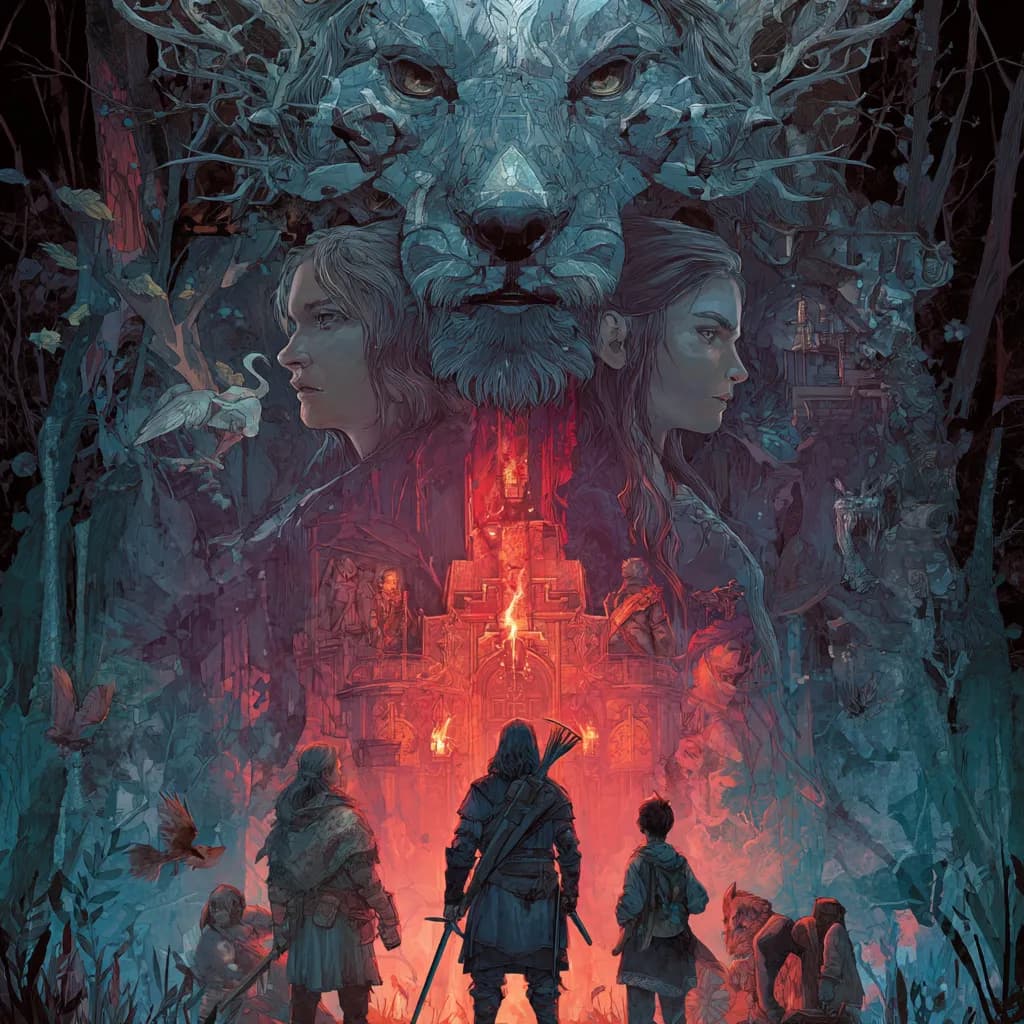
Daggerheart Character Creation

Pick a card. Roll the dice. Tell the story.

Daggerheart is fiction-first and card-driven. Every action rolls 2d12 — one Hope, one Fear — and your domain cards shape the moments you're remembered for.

Quick reference

6
Traits
9
Classes
9
Domains
2d12
Hope + Fear dice

Step 1: Choose an ancestry

Ancestry is your biological heritage. Daggerheart's roster is broad — Catfolk, Clank, Drakona, Dwarf, Elf, Faerie, Faun, Firbolg, Fungril, Galapa, Giant, Goblin, Halfling, Human, Infernis, Katari, Orc, Ribbet, Simiah and others. Each grants two ancestry features (one passive, one active).

You can also mix ancestries by taking one feature from each of two ancestries — useful for representing mixed heritage in the fiction.

Step 2: Choose a community

Community is the culture or environment that shaped your character before adventuring. It's separate from ancestry — a Human can be Highborne or Wildborne, and a Faun can be Slyborne or Loreborne.

Highborne (noble courts, wealth, social capital)
Loreborne (libraries, scholarship, hidden histories)
Orderborne (faiths, temples, codes of conduct)
Ridgeborne (mountain peoples, hardy and territorial)
Seaborne (coastal, ports, traders and pirates)
Slyborne (back-alleys, criminal underworlds)
Wanderborne (no fixed home, nomadic traditions)
Wildborne (forests, plains, frontier dwellers)

Step 3: Choose a class

Your class defines your abilities, your two domains (which domain cards you can take), your HP slots, your Evasion base, and your subclass options. Most classes have 2–3 subclasses.

Bard
Codex, Grace

Primary: Presence

Inspiration, social magic, support

Druid
Sage, Bone

Primary: Instinct

Beastform, nature, healing

Guardian
Valor, Blade

Primary: Strength

Frontline defender, protection

Ranger
Bone, Sage

Primary: Agility

Ranged combat, tracking

Rogue
Midnight, Grace

Primary: Finesse

Stealth, precision strikes

Seraph
Splendor, Valor

Primary: Strength or Presence

Divine warrior, radiant magic

Sorcerer
Arcana, Midnight

Primary: Instinct

Innate elemental magic

Warrior
Blade, Bone

Primary: Strength or Agility

Versatile martial fighter

Wizard
Codex, Splendor

Primary: Knowledge

Studied arcane magic

Step 4: Set your traits

Six traits, each ranging from -1 to +3 at creation. You add the relevant trait to your 2d12 + any modifiers when you make an action roll. The GM decides which trait applies based on the fiction.

Agility

Speed, reflexes, ranged attacks, dodging, acrobatics.

Strength

Physical power, melee attacks, lifting, resisting harm.

Finesse

Precision, stealth, lockpicking, sleight of hand.

Instinct

Perception, survival, intuition, reading people.

Knowledge

Lore, arcana, history, medicine, analysis.

Presence

Charm, leadership, persuasion, performance.

Your class hints at the distribution

A Wizard biases toward Knowledge; a Rogue toward Finesse; a Guardian toward Strength. Don't spread evenly — Daggerheart rewards committing to your class's primary trait at +3.

Step 5: Choose Experiences

Experiences are narrative tags, not skills. Examples: "Trained by the royal guard", "Survived a shipwreck", "Studied ancient texts", "Grew up on the streets", "Apprenticed to a blacksmith".

When one of your Experiences clearly applies to a roll, you can spend Hope to add it — usually as an extra die or a flat bonus that the GM adjudicates. Choose Experiences that paint a character, not stat-block bonuses.

Step 6: Domain cards

Each class has access to two domains. At creation you pick a small starting hand of cards from your domains; you gain more as you level. Domain cards represent class features, spells, signature moves, and reactions.

Arcana
Raw magical energy, elemental forces
Blade
Martial mastery, weapon techniques
Bone
The hunt, survival, primal ferocity
Codex
Knowledge, language, the written word
Grace
Agility, performance, fluid movement
Midnight
Shadow, stealth, hidden things
Sage
Nature, healing, wisdom of the wild
Splendor
Light, radiance, divine power
Valor
Courage, protection, steadfast defense

Derived stats and the roll loop

HP slots
Typically 6, set by class
Mark slots when armor doesn't soak all damage
Stress slots
Typically 5
Filled by fear, exertion, hard choices
Evasion
Class base + Agility modifier
Difficulty threshold for attacks against you
Action roll
2d12 + trait modifier vs GM threshold
Higher die generates Hope (you) or Fear (GM)
Doubles = critical

When the two d12s match, your action critically succeeds regardless of the total. The GM and player collaborate on what the extra benefit looks like — and you usually generate Hope.

Daggerheart FAQ

How does the 2d12 Hope/Fear system work?
What's the trait range at character creation?
What are domain cards?
What are Experiences?
How do HP and Stress work?
What does Evasion mean?

Build your Daggerheart hero

Use the guided builder for a step-by-step walkthrough, or open the sheet directly if you already know what you're making.