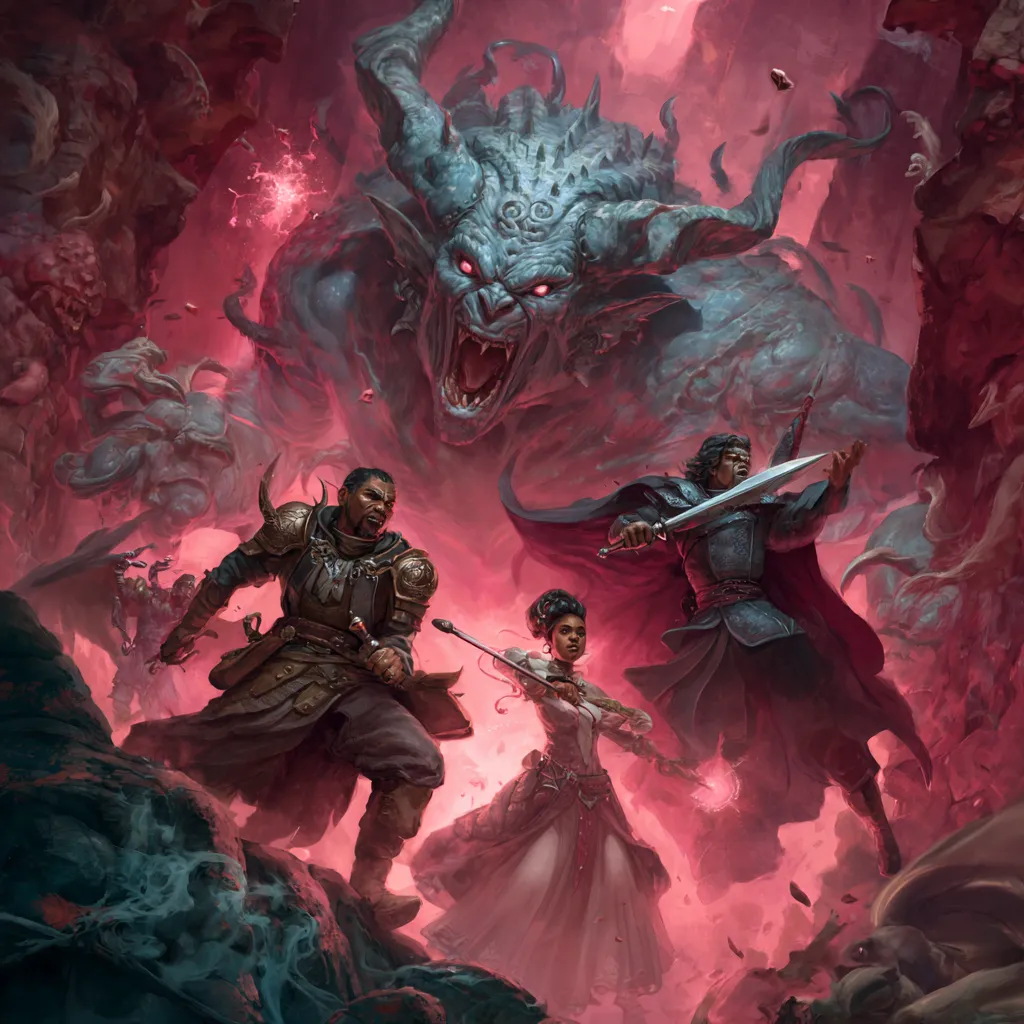
Dungeons & Dragons 5th Edition
How to play Dungeons & Dragons 5th Edition
A fast, practical overview. Dungeons & Dragons 5th Edition is the world's most popular tabletop roleplaying game, where players create heroic adventurers and explore fantastical worlds filled with magic, monsters, and mystery. Using a d20-based system, players roll a twenty-sided die plus modifiers to determine the outcome of attacks, skill checks, and saving throws.
Beginner checklist
Say what you do and what you want to happen (intent).
Use the system's core roll mechanic to resolve uncertainty.
Apply consequences quickly to keep scenes moving.
Between sessions, record advancement so changes are consistent.
How rolls work
This system uses a dice pool approach in RPG Stack’s guides: build a pool from your character traits, roll, count successes, and apply consequences.
Build your pool from the relevant traits.
Roll and count successes according to the system’s thresholds.
Apply consequences and record changes on the sheet.
Treat every roll as a decision: success advances, failure changes the situation.
Key facts
12 classes: Barbarian, Bard, Cleric, Druid, Fighter, Monk, Paladin, Ranger, Rogue, Sorcerer, Warlock, Wizard
9 races (SRD): Human, Elf, Dwarf, Halfling, Dragonborn, Gnome, Half-Elf, Half-Orc, Tiefling
6 ability scores: Strength, Dexterity, Constitution, Intelligence, Wisdom, Charisma
d20 system: Roll d20 + modifier vs. Difficulty Class (DC) or Armor Class (AC)
Proficiency bonus: Scales from +2 to +6 across levels 1–20
Advantage/disadvantage: Roll 2d20 and take higher or lower instead of flat modifiers
Derived stats: HP, AC, Initiative, ProficiencyBonus, Speed, HitDice, PassivePerception
Play examples
Intent, roll, consequence
State what you want, roll only when the outcome is uncertain, and apply a consequence that changes the situation.
Change approach instead of rerolling
If you fail, don't spam attempts. Change position, get help, spend resources, or accept a cost to keep the scene moving.
Common mistakes
Rolling too often.
Roll when the outcome matters and uncertainty is real; otherwise just do the thing.
Stalling on failure.
On failure, change the situation (cost, complication, new threat) and move forward.
Character creation
Choose a Race
Choose a Class
Determine Ability Scores (Standard Array, Point Buy, or 4d6 drop lowest)
Describe Your Character (name, alignment, background, personality)
Calculate Derived Stats (HP, AC, initiative, proficiency bonus)
Choose Equipment and Spells (if applicable)
Choose Proficiencies and Languages
What to track during play
What to open next
Prefer definitions? Browse terms in the Dungeons & Dragons 5th Edition glossary.
FAQ
How does the d20 system work in D&D 5e?
Roll a d20 and add relevant modifiers (ability modifier + proficiency bonus if proficient). For attacks, compare the total to the target's Armor Class (AC). For ability checks and saving throws, compare to the Difficulty Class (DC) set by the DM. Meet or exceed the target number to succeed.
What are the ability scores in D&D 5e?
The six ability scores are Strength (physical power), Dexterity (agility and reflexes), Constitution (health and stamina), Intelligence (learning and memory), Wisdom (perception and insight), and Charisma (force of personality). Each score has a modifier calculated as (score - 10) / 2, rounded down.
How does advantage and disadvantage work?
Instead of stacking bonuses and penalties, D&D 5e uses advantage (roll 2d20, take the higher) and disadvantage (roll 2d20, take the lower). If you have both, they cancel out regardless of how many sources of each you have. This keeps the math fast and the outcomes dramatic.
What class should I play as a beginner?
Fighter is the most beginner-friendly class: straightforward combat, no spell management, and effective at every level. Champion subclass is especially simple. Barbarian (Rage and hit things) and Rogue (sneak attack and skills) are also good starting points.
How does spellcasting work in D&D 5e?
Spellcasters have spell slots that limit how many spells they can cast between rests. Spell slots come in levels 1–9. Cantrips (level 0) can be cast unlimited times. Some classes prepare spells daily (Cleric, Druid, Wizard), while others know a fixed list (Bard, Sorcerer, Warlock). Your spellcasting ability (INT, WIS, or CHA) determines your spell save DC and attack bonus.